
Explore Our Training Programs
- Electrical Training
- Safety
- Electrical Compliance
- Electrical Automation
- Electrical Maintenance
- Mechanical Training
- HVAC
- Codes and Standards
- Fluid Power
- Maintenance
- View All Training Programs
-
View All Electrical Safety Training ProgramsTop Electrical Safety Training Programs
- Arc Flash Electrical Safety [Based on NFPA 70E®]
- Electrical Safety: NFPA 70E Refresher
- Electrical Safety Awareness
- Electrical Safety Practical Skills for Switchgear
- Electrical Safety: Power Generation, Transmission & Distribution [based on OSHA 1910.269]
- Seguridad Eléctrica en el centro de trabajo, [Basado en el manual NFPA 70E® 2021]
- Electrical Safety, Operation and Maintenance for Medium Voltage (MV) Distribution Systems and Equipment
- Train-The-Observer: Electrical Safety Field Observer Training
Upcoming Training Programs- 11/12 - 11/12 : Centennial , CO Electrical Safety Practical Skills for Switchgear
- 12/14 - 12/15 : Live Online Training , CO Arc Flash Electrical Safety [Based on NFPA 70E®]
- 01/18 - 01/19 : Live Online Training , CO Arc Flash Electrical Safety [Based on NFPA 70E®]
- 01/25 - 01/26 : Live Online Training , CO Arc Flash Electrical Safety [Based on NFPA 70E®]
- 02/01 - 02/02 : Live Online Training , CO Arc Flash Electrical Safety [Based on NFPA 70E®]
-
View All Electrical Electrical Compliance Training ProgramsTop Electrical Electrical Compliance Training Programs
- 2026 NFPA 70® – NATIONAL ELECTRICAL CODE® [NEC]
- New Jersey 1 Hour Electrical Law (License Requirement)
- Grounding and Bonding Essentials: NEC®
- Electrical Systems: Hazardous Locations
- NEC® – Analysis of Changes 2020 with Practical Exercises
- NFPA 110® – Emergency & Standby Power Systems
- NFPA 70B® Standard Overview
- NFPA 70B Standard for Electrical Equipment Maintenance (8-hr for Maintenance Technicians)
- NFPA 72: National Fire Alarm & Signaling Code®
- NFPA 79® – Electrical Standard For Industrial Machinery®
- NICET I & II
- National Electrical Safety Code® [NESC]
- NEC® – Analysis of Changes 2023
- Connecticut Four Hour 2025 Electricians Continuing Education Course
- 2023 National Electrical Code® With 2023 Washington State’s Electrical Code Amendments (based on Washington Administrative Code 296-46B)
- Texas NEC® 2026 with Law and Electrical Safety
Upcoming Training Programs- 11/11 - 11/13 : Live Online Training , CO 2026 NFPA 70® – NATIONAL ELECTRICAL CODE® [NEC]
- 12/16 - 12/18 : Live Online Training , CO 2026 NFPA 70® – NATIONAL ELECTRICAL CODE® [NEC]
- 01/25 - 01/26 : Live Online Training , CO NICET I & II
- 02/22 - 02/24 : Live Online Training , CO 2026 NFPA 70® – NATIONAL ELECTRICAL CODE® [NEC]
- 04/12 - 04/14 : Live Online Training , CO 2026 NFPA 70® – NATIONAL ELECTRICAL CODE® [NEC]
-
View All Electrical Electrical Automation Training ProgramsTop Electrical Electrical Automation Training Programs
- Instrumentation & Process Control
- PLCs [Programmable Logic Controllers]: Automation Systems
- Studio 5000 PLC Programming (ControlLogix / CompactLogix)
- PLCs [Programmable Logic Controllers]: Fundamentals
- PLCs [Programmable Logic Controllers]: Siemens Simatic S7
- Tuning DDC/Process Control Loops
- Variable Frequency Drives [VFD]
Upcoming Training Programs- 11/10 - 11/12 : Centennial , CO Variable Frequency Drives [VFD]
- 04/19 - 04/21 : Centennial , CO PLCs [Programmable Logic Controllers]: Fundamentals
- 04/19 - 04/20 : Centennial , CO PLCs [Programmable Logic Controllers]: Automation Systems
- 05/17 - 05/19 : Centennial , CO Variable Frequency Drives [VFD]
- 07/26 - 07/28 : Centennial , CO PLCs [Programmable Logic Controllers]: Fundamentals
-
View All Electrical Electrical Maintenance Training ProgramsUpcoming Training Programs
- 11/17 - 11/18 : Centennial , CO Industrial Electronics & Circuits
- 11/19 - 11/20 : Centennial , CO Electrical Motor Control Circuits: Troubleshooting
- 02/08 - 02/09 : Centennial , CO Industrial Electronics & Circuits
- 02/08 - 02/09 : Centennial , CO Electrical Motor Control Circuits: Troubleshooting
- 03/15 - 03/16 : Centennial , CO Industrial Electronics & Circuits
-
View All Mechanical HVAC Training ProgramsTop Mechanical HVAC Training Programs
- Balancing of Water and Air Systems
- Boilers: An Operational Workshop
- HVAC: Brazing [Advanced]
- Air Conditioning & Refrigeration: Advanced
- HVAC: Air Conditioning & Refrigeration
- HVAC: Principles of Heating & Ventilation
- Chillers: Operation & Maintenance of Chilled Water Systems
- Steam Distribution Systems
- Water Treatment for Boilers and Chilled Water Systems
- EPA 608 Certification Exam Preparation & Proctoring
Upcoming Training Programs- 03/08 - 03/10 : Centennial , CO HVAC: Air Conditioning & Refrigeration
- 03/29 - 03/31 : Centennial , CO Chillers: Operation & Maintenance of Chilled Water Systems
- 06/07 - 06/09 : Centennial , CO HVAC: Air Conditioning & Refrigeration
- 06/14 - 06/14 : Centennial , CO EPA 608 Certification Exam Preparation & Proctoring
- 07/12 - 07/14 : Centennial , CO Chillers: Operation & Maintenance of Chilled Water Systems
- View All Mechanical Codes and Standards Training Programs
- View All Mechanical Fluid Power Training Programs
-
View All Mechanical Maintenance Training ProgramsUpcoming Training Programs
- 03/01 - 03/02 : Centennial , CO Electric Motors: Understanding & Troubleshooting
- 05/24 - 05/25 : Centennial , CO Principles of Bearings & Lubrication
- 08/23 - 08/24 : Centennial , CO Shaft Alignment with Laser Technology
- 11/01 - 11/02 : Centennial , CO Electric Motors: Understanding & Troubleshooting
- 12/13 - 12/14 : Centennial , CO Principles of Bearings & Lubrication
Select the following link if you would like to recover a report that has been previously deleted.
NTT Blog
NTT Inc. - Grounding and Bonding Essentials in the 2026 NEC: Supervisor Guidance for Verifying the Effective Fault Current Path
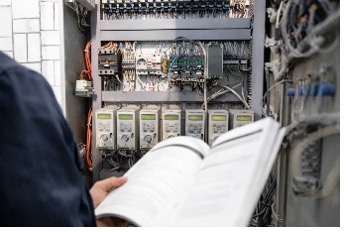
Grounding and Bonding Essentials in the 2026 NEC: Supervisor Guidance for Verifying the Effective Fault Current Path
Actionable Tip: Implement a quarterly Effective Fault Current Path Verification
A practical way to reduce troubleshooting time and prevent noncompliant installations is to standardize a quarterly review focused on the effective fault current path. The objective is to confirm that fault current can return to the source on a permanent, low impedance path so overcurrent protective devices can operate as intended.
Use this structure:
- Review system scope
• Identify the service equipment, separately derived systems, major distribution (switchboards, panelboards, MCCs), and any high exposure areas where bonding and grounding errors have high consequence (wet locations, corrosive areas, high fault current equipment). - Clarify the intended return path on the one line diagram
• Mark the source, the grounded conductor (where applicable), equipment grounding conductors, and bonding points.
• Confirm that the team is using NEC defined terms (equipment grounding conductor, grounding electrode conductor, bonding jumper, main bonding jumper) to avoid miscommunication during corrections and inspections. - Assess bonding integrity from the load back toward the source
• Verify that enclosures, raceways, and fittings are bonded and continuous.
• Confirm that required bonding jumpers are installed where needed and that continuity checks are part of normal verification practices. - Assess the service and separately derived system bonding point
• Verify the main bonding jumper location and function at the service, and verify required bonding and grounding connections for separately derived systems.
• Look for misbonding conditions that create unintended parallel current paths or place normal current on metal parts. - Assess conductor sizing and installation practices
• Confirm grounding electrode conductor sizing using NEC tables and verify routing and connection requirements.
• Confirm equipment grounding conductor sizing using NEC tables and verify routing and installation considerations. - Document findings in a correction log
• Categorize findings as safety critical, reliability critical, or inspection critical.
• Assign ownership and a closure date, then recheck after corrective work.
This walkdown creates a repeatable control that supports inspection readiness, reduces recurring electrical faults, and improves consistency across teams and shifts.
Why grounding and bonding issues create repeat work
Grounding and bonding errors persist because the NEC defines required outcomes and prescriptive rules, but it does not always clarify the practical “why” behind the rule in a way that transfers quickly to field decisions.
An effective Fault Current Path Verification check can help you see if your workers can implement the code successful. If your workers struggle with the compliance application, that can give you insights on where training may be needed.
The Grounding and Bonding Essentials: NEC® courses teaches how to use the Soares Grounding and Bonding methodology to connect code requirements with how electricity behaves during normal and fault conditions. The outcome is that students learn how to apply rules correctly in real world installations.
Where to focus during assessment
During the quarterly Effective Fault Current Path Verification, prioritize these technical areas because they connect directly to predictable fault clearing and compliance:
- Clearing ground faults and short circuits
Confirm the effective fault current path concept is applied consistently and that teams can trace the single fault current path in common configurations. - Ground fault protection and GFCI coordination
Confirm workers understand how GFP and GFCI functions interact with bonding and grounding and how to perform functional verification concepts when devices are installed or maintained. - Grounding electrode system integrity
Confirm electrode types, system configuration, interconnection requirements, and installation considerations.
Treat electrode system issues as reliability and lightning and surge performance concerns, not as a substitute for the equipment grounding path during low voltage fault clearing. - Services and separately derived systems
Confirm service grounding configuration, main bonding jumper function and location, bonding jumper sizing, and correct identification and grounding of separately derived systems.
Safety and operational tip: Prevent incorrect reliance on earth as the fault clearing path
A common error is assuming that a grounding electrode connection to earth will clear faults in low voltage distribution systems. The Soares Grounding and Bonding book emphasizes that the grounding electrode and earth route is a high impedance circuit and does not meaningfully contribute to clearing a fault compared to equipment grounding conductors and properly routed grounded service conductors installed with the phase conductors.
Operational control to implement:
- Require that troubleshooting and commissioning checklists verify the equipment grounding conductor path and bonding integrity first.
- Treat any interruption of the equipment grounding conductor path as a critical defect because it compromises the effective fault current path back to the source.
- Clarify terminology during work planning. The NEC does not use informal trade terms such as safety ground, clean ground, or dirty ground, and undefined jargon increases errors between design, installation, and inspection stakeholders. Use NEC defined terms on drawings, work orders, and inspection forms.
How this course supports business outcomes
The Grounding and Bonding Essentials: NEC® course is structured for teams that need correct application of NEC® grounding and bonding requirements, conductor sizing using NEC® tables, installation verification, and troubleshooting practices.
Business outcomes supported by the training include:
- Reduced troubleshooting time and misdiagnosis tied to grounding and bonding problems
- Improved compliance with NEC® and related regulatory expectations, including AHJ inspections and OSHA electrical safety standards
- Prevention of equipment damage and downtime caused by ineffective fault clearing
- More consistent skill levels across teams, reducing reliance on a small number of senior electricians for complex grounding and bonding decisions
Take Action
Evaluate how consistently your team applies grounding and bonding rules across services, transformers, feeders, and additional buildings.
If you’re preparing for NEC® 2026 implementation, updating internal standards, or looking to reduce inspection corrections related to bonding and grounding, consider focused training that connects Code requirements to real-world installations.
To discuss scheduling options for Grounding and Bonding Essentials: NEC®, contact NTT Training at 303-649-9980 or visit www.nttinc.com.
Watch the Course Highlights Video:
📺 https://qrco.de/GR2616hr_MV
Empower your team with current NEC knowledge to ensure compliance, safety, and inspection readiness.
Recent Blog Posts
- Switchgear Safety Starts with Qualified Persons
- NESC in the Field: Helping Teams Connect On-Site Conditions to the Code
- Studio 5000 PLC Programming (ControlLogix / CompactLogix)
- Grounding and Bonding Essentials in the 2026 NEC: Supervisor Guidance for Verifying the Effective Fault Current Path
- Texas NEC® 2026 with Law and Electrical Safety
- Categories
- Uncategorized (6)
- Electrical Training Programs (97)
- Code & Standards (30)
- Electrical Maintenance (18)
- Mechanical HVAC (9)
- Safety (40)
- Mechanical Training Programs (75)
- Code & Standards (10)
- Electrical Safety (8)
- HVAC (19)
- Maintenance (19)
- Fluid Power (19)
- News (13)
- Onsite Training (2)
- Contractor Management (1)
- National Electric Code (13)
- OSHA Rules and Requirements (19)
- General Safety Tips (4)
- Industrial Safety (4)
- Plumbing Standards (3)
- Electrical Blueprint Reading (6)
- Natural Gas Safety (3)
- Ultrasonic Testing (1)
- PLC (12)
- High Voltage (4)
- Oil Analysis (2)
- Centrifugal Pumps (4)
- Variable Frequency Drives (6)
- Welding Safety (7)
- Chillers (3)
- Hazardous Locations (5)
- Confined Spaces (6)
- Infrared Thermography (2)
- NFPA 72 (4)
- Process Control Loops (3)
- Backflow Prevention (1)
- Electrical Grounding (2)
- Industrial Circuits (2)
- Boilers (5)
- Shaft Alignment (3)
- Hoisting and Rigging (3)
- Fiber Optics (5)
- Refrigeration (1)
- Arc Flash (8)
- NFPA 110 (1)
- Conveyor Systems (1)
- NFPA 70E (2)
- Process Instruments (1)
- Vibration Analysis (1)
- Industrial Generators (2)
- Life Safety Code (4)
- Electrical Switchgear (1)
- NFPA 79 (2)
- Steam Distribution Systems (2)
- Preventative Maintenance (2)
- Electrical Codes & Standards (5)
- Mechanical Maintenance (5)
- Mechanical Fluid Power (1)
- Electrical Safety (3)
Filter Blogs
- August 2026 (1)
- July 2026 (1)
- May 2026 (2)
- March 2026 (2)
- January 2026 (1)
- December 2025 (2)
- October 2025 (2)
- September 2025 (1)
- August 2025 (1)
- July 2025 (1)
- June 2025 (1)
- April 2025 (2)
- March 2025 (1)
- February 2025 (1)
- January 2025 (1)
- December 2024 (1)
- November 2024 (1)
- October 2024 (1)
- September 2024 (1)
- August 2023 (1)
- July 2023 (1)
- June 2023 (1)
- April 2023 (1)
- March 2023 (1)
- February 2023 (1)
- December 2022 (1)
- October 2022 (1)
- August 2022 (1)
- July 2022 (1)
- October 2019 (9)
- September 2019 (8)
- August 2019 (9)
- July 2019 (8)
- June 2019 (8)
- May 2019 (9)
- April 2019 (9)
- March 2019 (7)
- February 2019 (4)
- January 2019 (9)
- December 2018 (7)
- November 2018 (7)
- October 2018 (9)
- September 2018 (6)
- August 2018 (7)
- July 2018 (9)
- June 2018 (8)
- May 2018 (9)
- April 2018 (9)
- March 2018 (8)
- February 2018 (8)
- January 2018 (9)
- December 2017 (9)
- November 2017 (8)
- October 2017 (9)
- September 2017 (8)
- August 2017 (7)
- July 2017 (5)
- June 2017 (7)
- May 2017 (8)
- April 2017 (3)
- March 2017 (7)
- February 2017 (3)
- January 2017 (4)
- December 2016 (7)
- November 2016 (4)
- October 2016 (7)
- September 2016 (5)
- August 2016 (6)
- June 2016 (1)
- May 2016 (2)
- April 2016 (2)
- March 2016 (1)
- January 2016 (2)
- October 2015 (1)
- August 2015 (1)
- July 2015 (3)
- May 2015 (1)
- January 2015 (3)
- April 2014 (4)
Trained Workers → Stronger Companies
Our Mission:
Deliver solutions to our clients (and their global workforce) designed for safety, productivity and profitability.
Our Vision:
Empowering clients and their employees to be safe and skilled.
NTT Training Inc. has been accredited by the Accrediting Council for Continuing Education & Training (ACCET). 
 Better Business Bureau
A Training Division of ECPI University